Healthcare Enterprise SaaS
Role
Senior Product Designer
Product
Enterprise SaaS messaging platform
Scope
Skim It
Deep Dive
Building automated communication flows required tedious manual setup and complex logic managing, which made the system difficult to use and error-prone leading to missed tasks and ultimately, appointment no-shows. I simplified the structure to reduce manual setup and automate conversational AI setup.
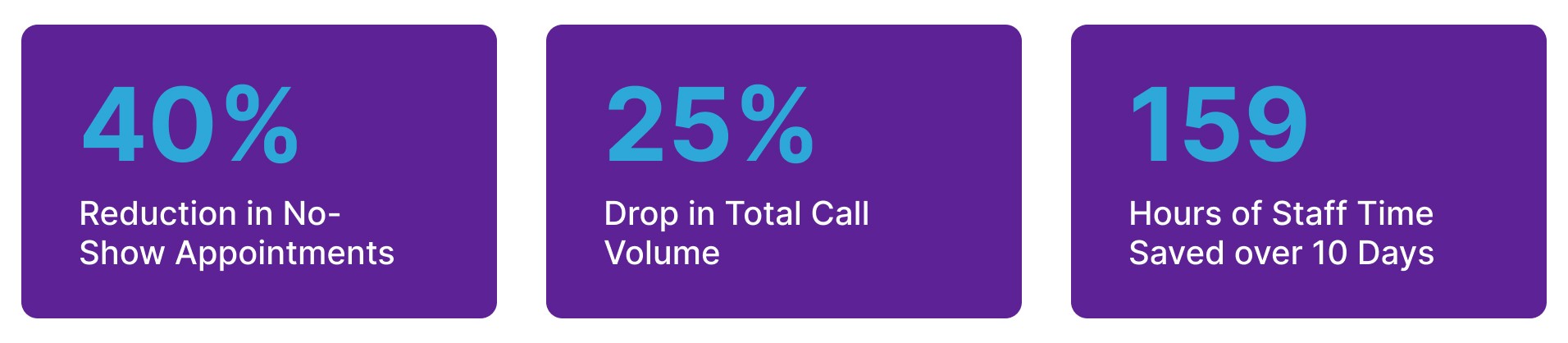
40% decrease in appointment no-shows, and 25% reduction in total call volume done for manual follow-ups and troubleshooting.
The challenge wasn't the UI, it was making complex logic understandable and more efficient.
The Problem
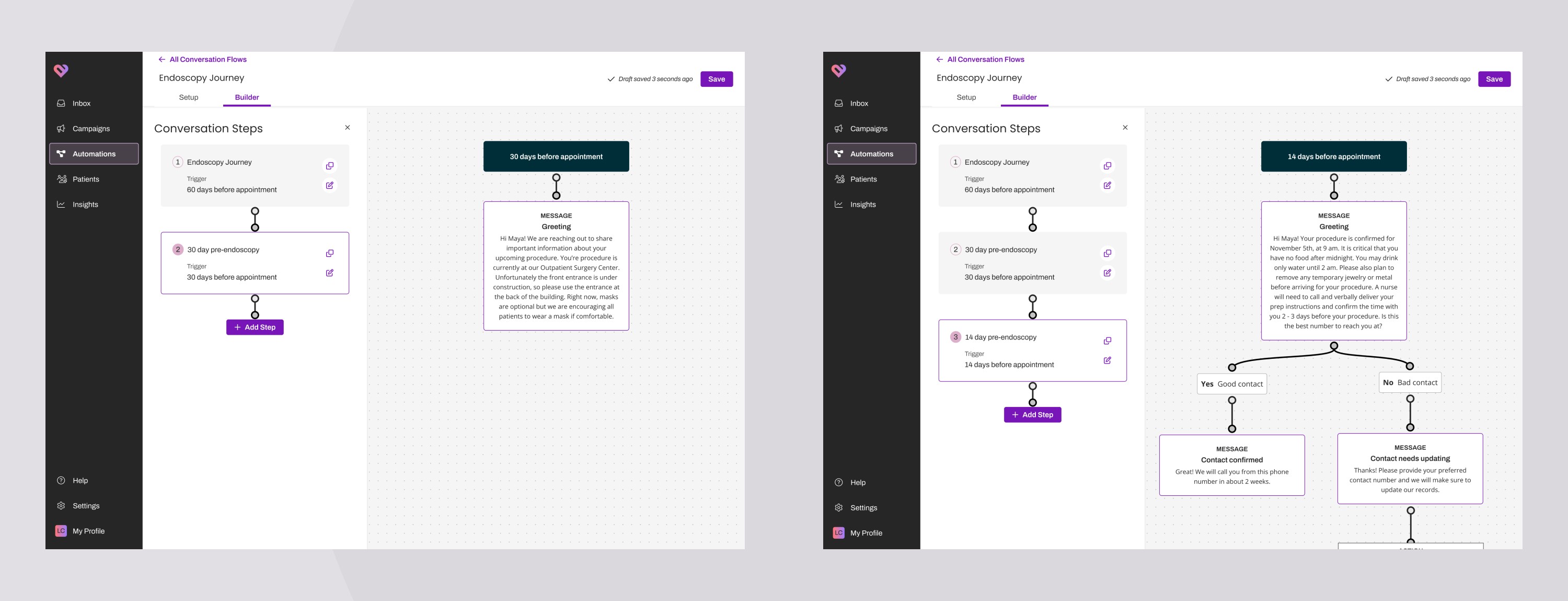
Care teams were forced to manually build and manage up to 8-10 separate conversational AI triggers to support a single care journey. These fragmented flows were hard to set up, difficult to track, and easy to break, leading to missed information and appointments, delayed communication, and increased admin burden.
Providers spent more time managing the system than supporting patients, and critical steps in care were slipping through the cracks.
The Solution
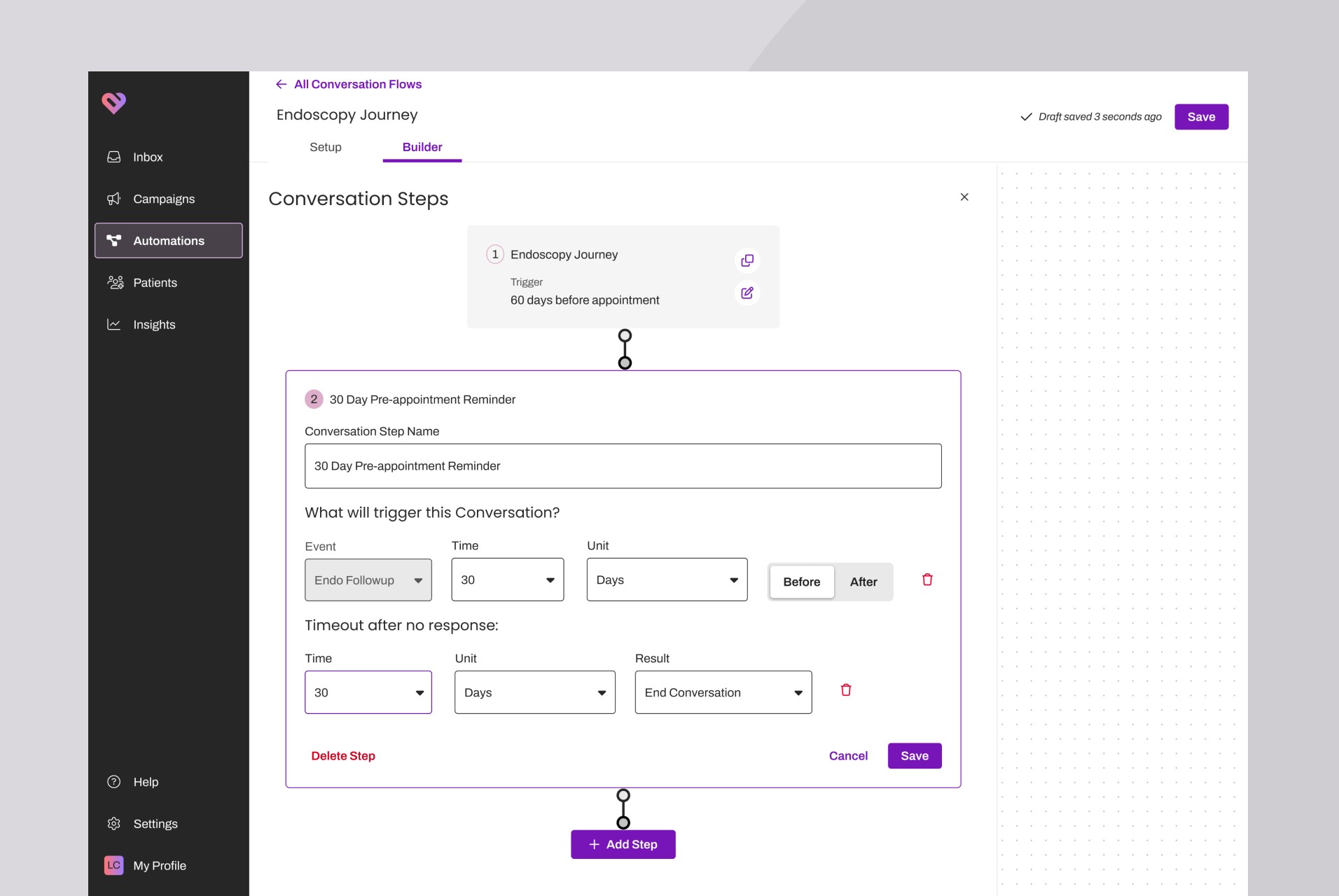
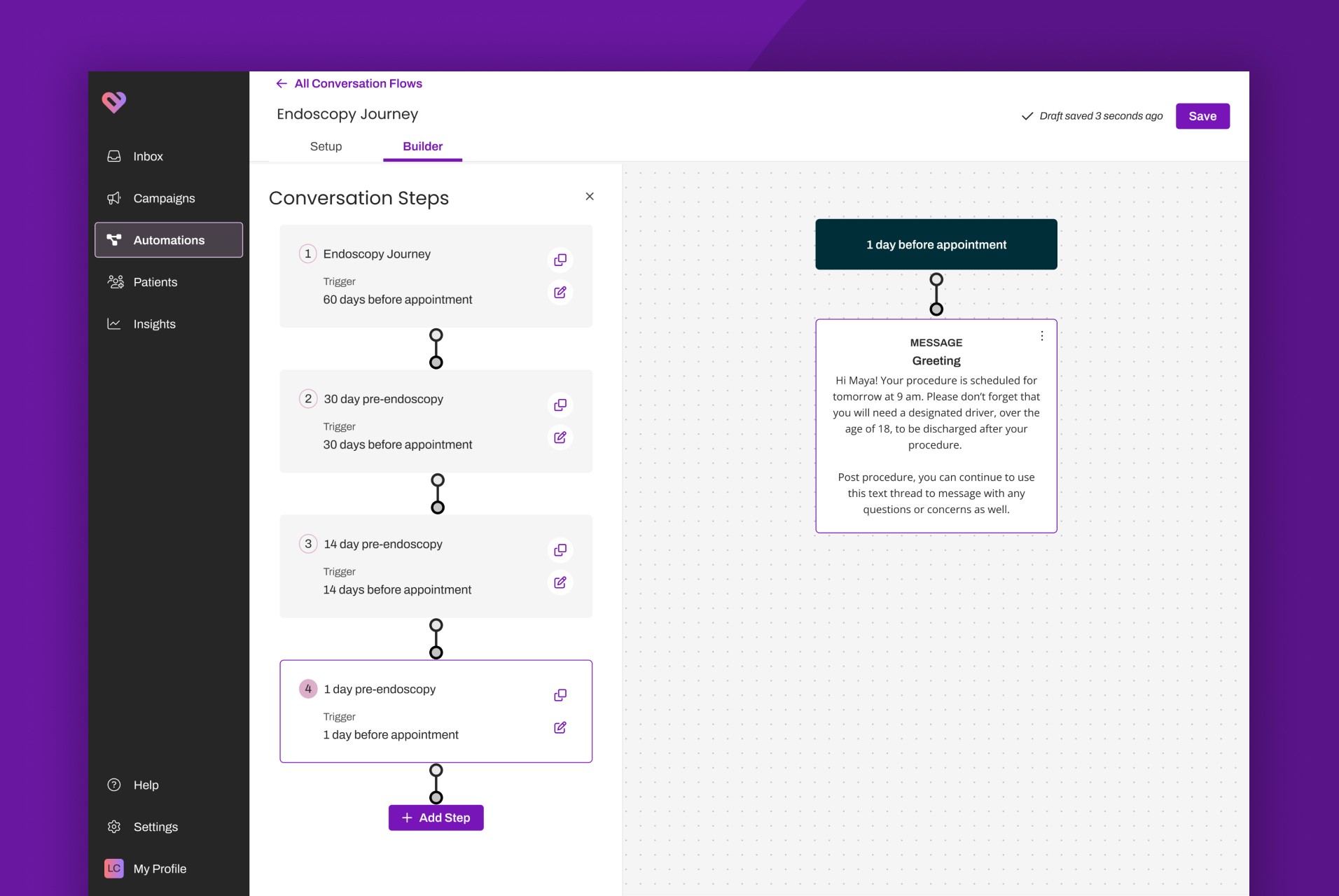
I led the UX, research, and interaction design for an automated communicated system that unified conversations into a single guided journey. Instead of building messages one by one, team could now create structured, multi-step experiences that adapted to patient progress and timing.
I focused heavily on information architecture and clarity, showing complexity only when needed so workflows felt manageable without sacrificing flexibility.
The result was a system that reduced setup time, prevented errors, and made it easier for care teams to trust automation.
What I did
Led end-to-end UX and interaction design from concept through launch
Conducted user research with care teams and clinicians
Designed automated workflows with manual override capabilities
Balanced clinical flexibility with scalability needs
Partnered with product and engineering to ship iteratively
Business Impact
Reduced manual effort for care teams managing high patient volumes
Improved reliability of patient communication across long, multi-step journeys
Fewer missed steps that previously led to delays, no-shows, or follow-up work
Key Results
This work transformed a time consuming, manual process into a scalable system that supported both operational efficiency and better patient outcomes.