Behavioral Health App
Improved Patient Adherence by 65% Through Behavioral Health App Design
I led the design of a behavioral health mobile app from the ground up, rethinking how assessments could feel supportive, approachable, and worth returning to for patients navigating anxiety, depression, and trauma.
Role
Product Designer
Product
Patient facing mobile app (iOS/Android)
Scope
0>1 app design, research, testing, launch
Skim It
Deep Dive
Patients were dropping off and not completing mental health assessments due to cognitive overload and poor UX. I redesigned the full mobile app experience around behavior, engagement, and trust.
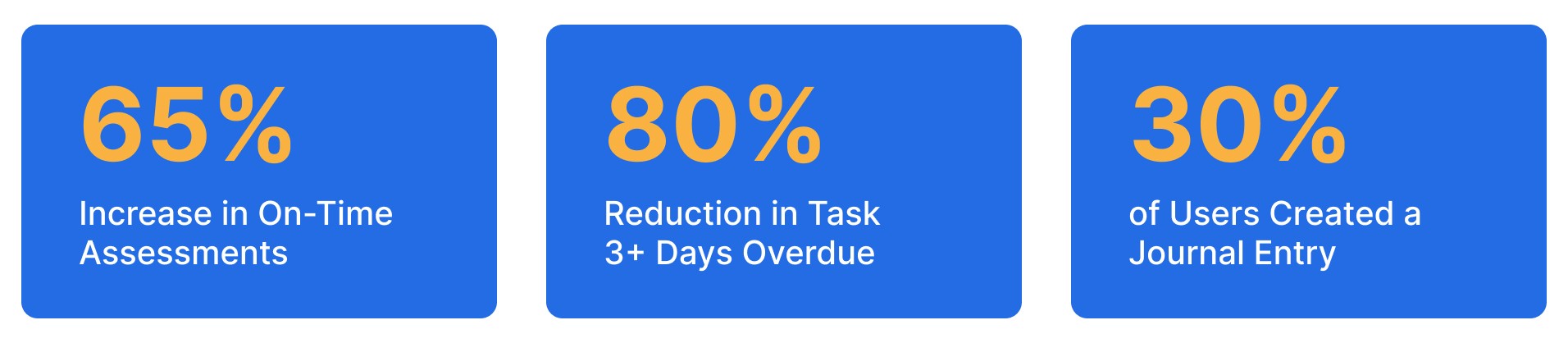
65% increase in assessment completion rate, and 80% reduction in task 3+ days overdue.
The problem ran deeper than just a UX fix. Patients needed to engage to help improve their mental health.
The Problem
The original ask focused narrowly on improving assessment completion, but early research showed a much deeper issue.
Patients in care were being asked to complete overwhelming, clinical assessments while navigating anxiety, depression, or trauma. The experience increased cognitive load, discouraged engagement, and failed to reflect how patients actually process information in vulnerable states. Providers also lacked visibility into progress which actively held up refined care.
The Solution
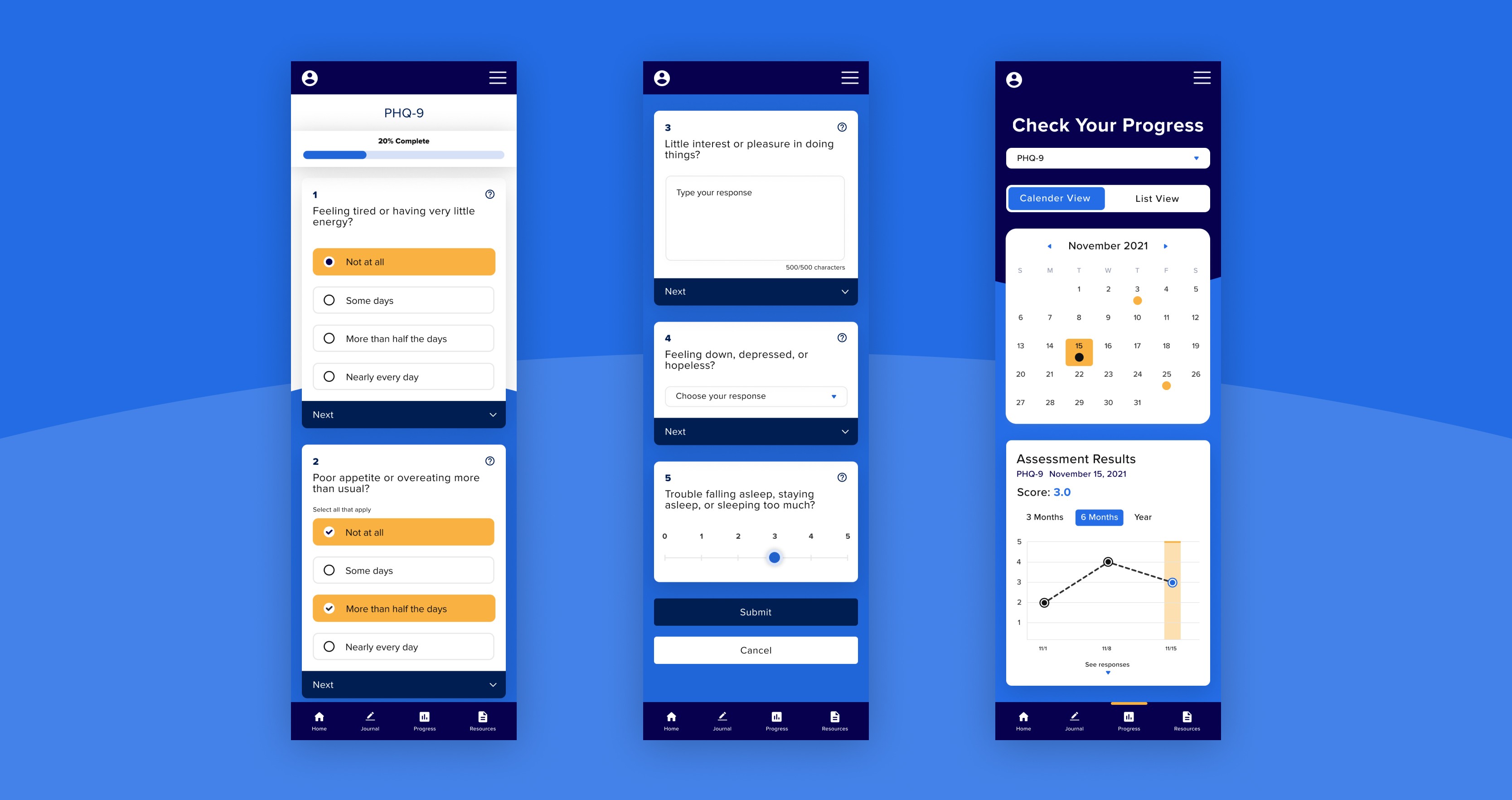
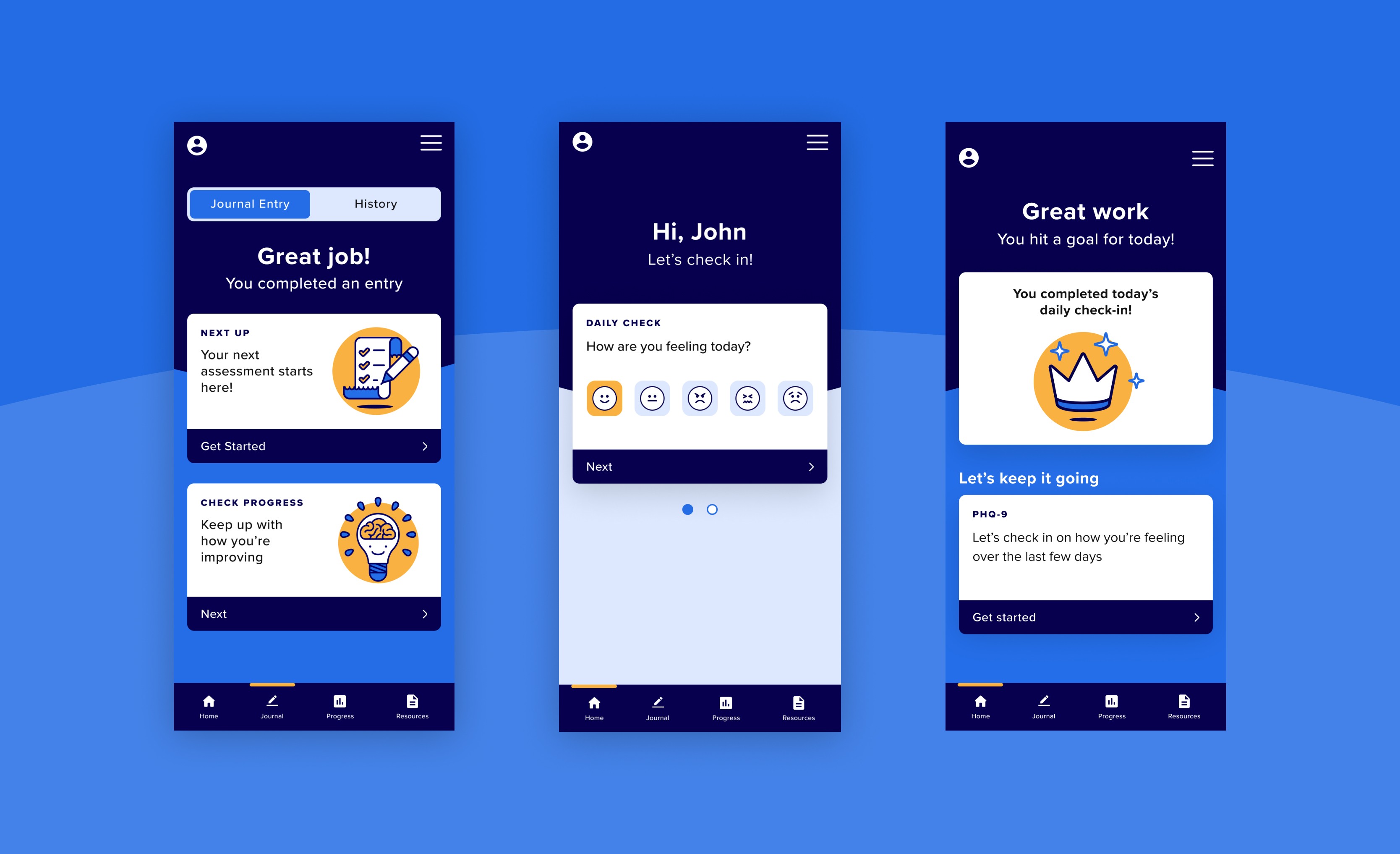
Rather than just updating the assessments, I reframed the problem around emotional safety and engagement. I led UX and research for a new mobile app built from scratch, redesigning assessments with flexible response types, guided pacing, and reduced decision fatigue.
I independently put together an interview panel with licensed therapists to do a psychological deep dive on the types of users I was designing for, which directly helped shape tone, structure, and interaction patterns.
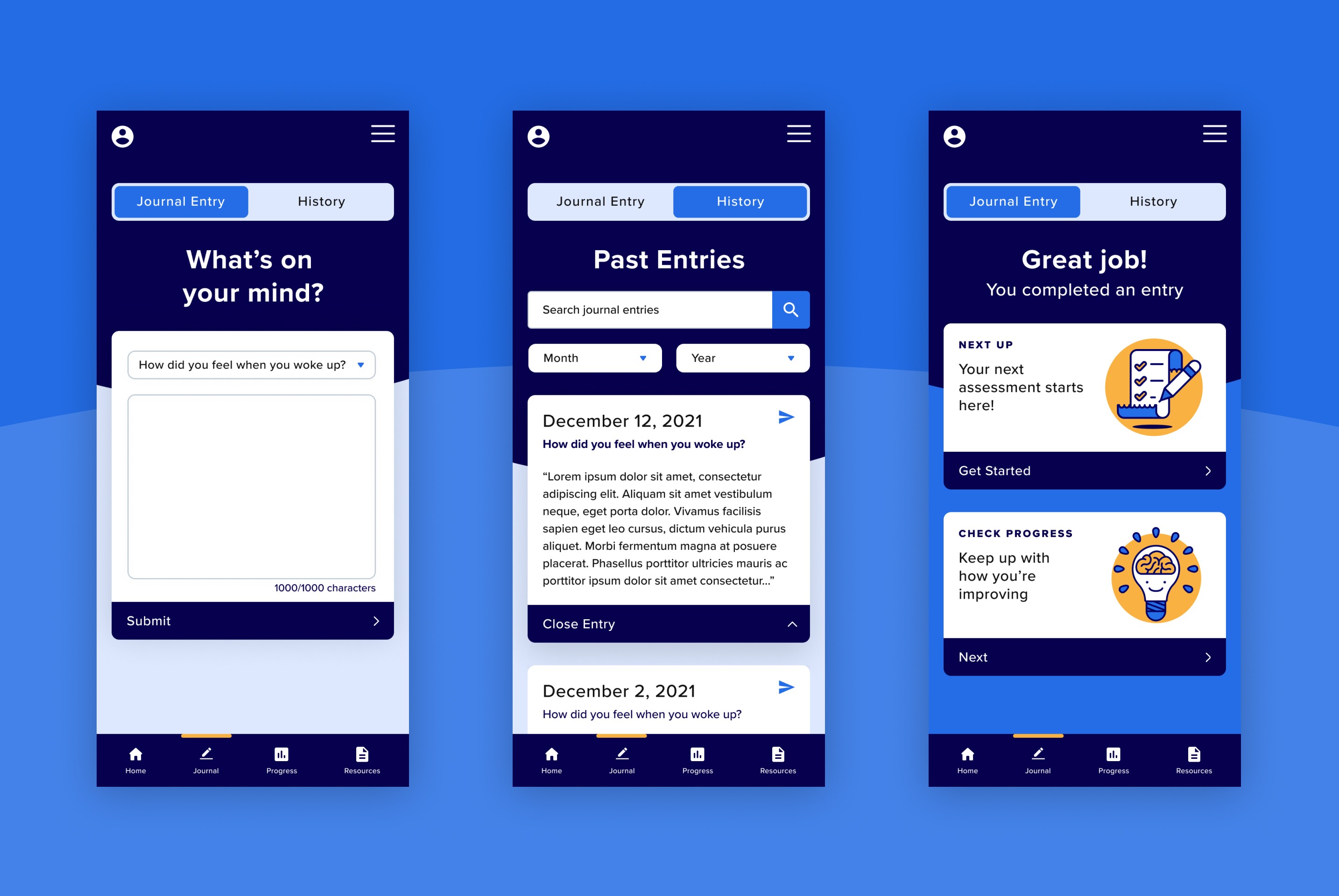
The experience was intentionally expanded beyond just assessments, reimagining the product as something patients would return to voluntarily rather than just complete out of obligation. By introducing supportive patterns like journaling and progress-based feedback, the app became something the users wanted to use, not just something they had to use.
What I did
Led end-to-end product design for a 0-to-1 behavioral health mobile app
Planned and facilitated user interviews and a therapist advisory panel
Redesigned assessment flows to reduce cognitive load and emotional friction
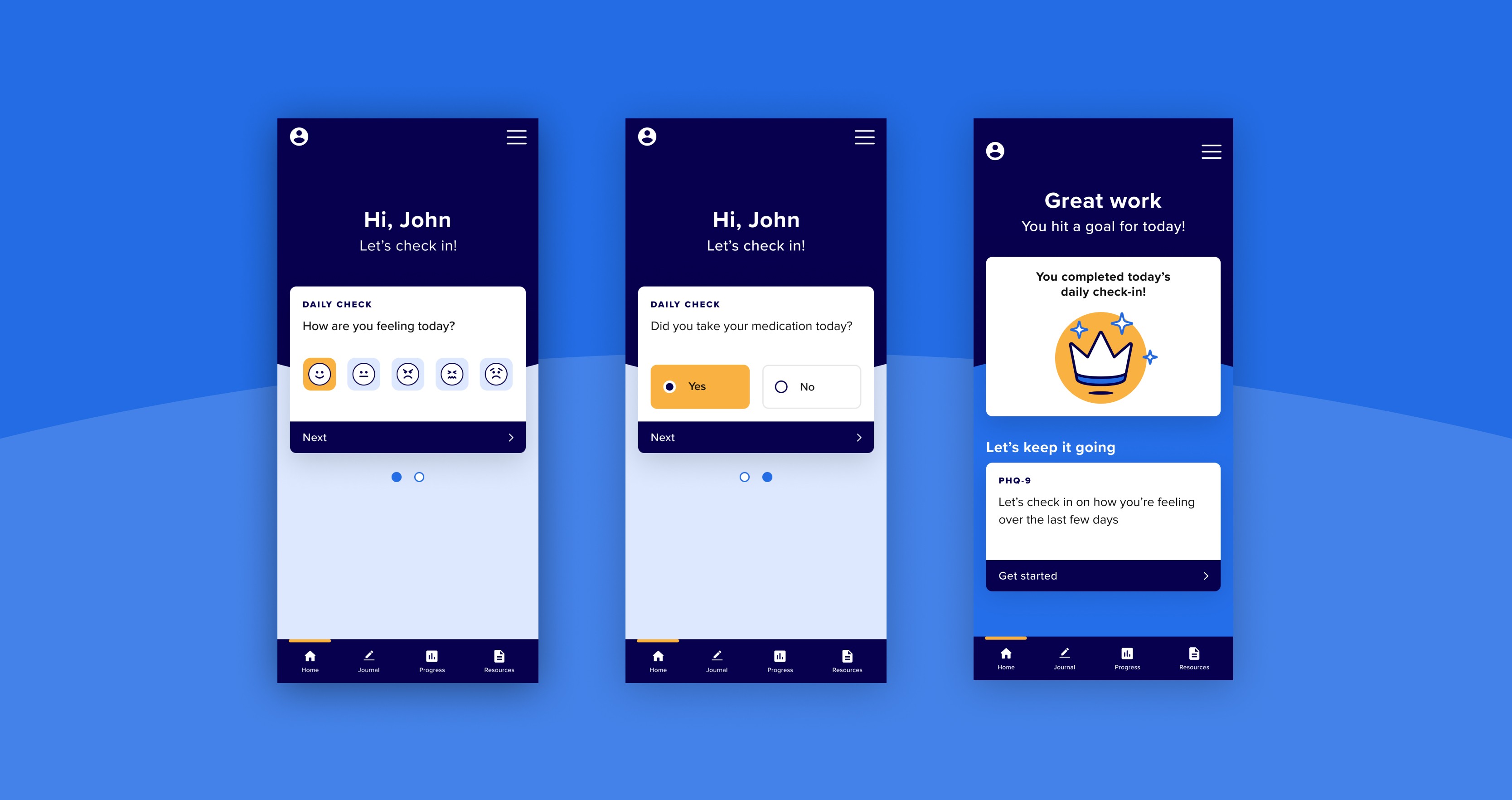
Defined information architecture and looping task flows to increase completion
Owned visual design, interaction patterns, and emotionally sensitive language
Validated designs through usability testing, directly informing iteration and final release decisions
Business Impact
Improved assessment completion unlocked more time and effective care
Fewer overdue tasks reduced manual follow-up for providers
Higher engagement strengthened retention and long-term platform value
Key Results
The result was a shift from prescribed tasks to a more human-centered experience that better supported both patient wellbeing and provider decision-making.